
One of the most common questions we hear at Maupin & Brown Dentistry is simple: Am I even a candidate? If you’re asking whether your bone is healthy enough for dental implants in Roswell, you’re already thinking like a smart patient. Bone health is the foundation of implant success. Understanding what that means for your specific situation is the first step toward a confident smile.
Why Bone Health Matters for Dental Implants in Roswell
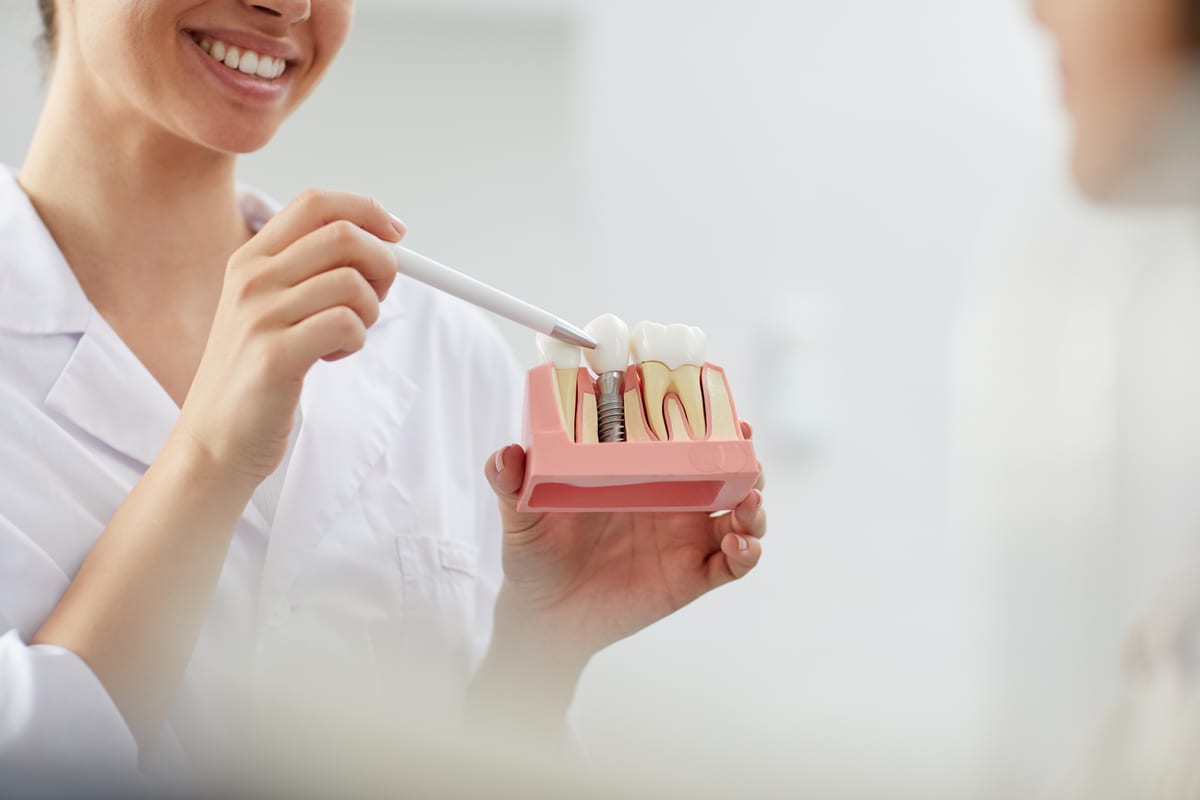
A dental implant is a small titanium post placed directly into your jawbone. It acts as an artificial tooth root. For this to work long-term, your jawbone must be strong and dense enough to fuse with the implant — a process called osseointegration.
Without adequate bone, the implant has nothing solid to anchor into. It may fail to integrate, shift, or cause complications. This is why Dr. David Brown always evaluates bone quality before recommending implants to any patient.
The good news is that many patients who worry about bone loss are still excellent candidates. Modern techniques and bone grafting options have expanded who qualifies. You may have more options than you think.
Common Factors That Affect Your Candidacy
Every patient is different. Several key factors influence whether your bone can support an implant right now — or with some preparation.
- Bone density and volume: You need sufficient bone height and width at the implant site.
- Gum health: Active gum disease can compromise implant success and must be treated first.
- Overall medical health: Conditions like uncontrolled diabetes can slow healing and affect bone integration.
- Smoking: Tobacco use significantly reduces blood flow to the gums and impairs bone healing.
- Tooth loss duration: The longer a tooth has been missing, the more bone may have deteriorated.
- Age: Adults of any age can receive implants, but jaw development must be complete in younger patients.
None of these factors automatically disqualifies you. They simply shape your treatment plan. Dr. Brown takes time to review each one carefully during your consultation.
What Happens If You Don’t Have Enough Bone?
Low bone density sounds discouraging — but it’s often a solvable problem. Bone grafting is a well-established procedure that rebuilds lost jawbone before implant placement. It adds volume and density where your body needs it most.
A bone graft uses donor material or synthetic alternatives to stimulate your body’s natural bone-growing process. After healing — typically several months — your jaw becomes strong enough to support an implant.
Sinus lifts are another option for patients missing upper back teeth. This procedure gently raises the sinus floor to create room for new bone. Both techniques are routinely performed as part of Implant Dentistry Roswell patients can trust.
The timeline may be longer with grafting, but the outcome is a permanent, natural-feeling tooth replacement. Many patients say the wait is absolutely worth it.
Health Conditions and Lifestyle Choices That Matter
Your overall health plays a direct role in implant success. Certain conditions require extra attention before and during treatment.
Diabetes: Well-controlled diabetes does not prevent implants. Poorly controlled blood sugar, however, slows healing and raises infection risk. Working with your physician to stabilize glucose levels is often part of the preparation process.
Osteoporosis: This condition reduces bone density throughout the body, including the jaw. Medications used to treat osteoporosis — particularly bisphosphonates — can affect bone healing. Dr. Brown will review your medications and coordinate with your doctor if needed.
Smoking: Patients who smoke face a higher risk of implant failure. Smoking restricts the blood supply needed for healing. Quitting — even temporarily around the time of surgery — significantly improves your odds of success.
It’s also worth noting that prior dental infections can affect implant candidacy. If you’ve had Root Canal Therapy Roswell patients frequently ask about transitioning from a treated tooth to an implant. Dr. Brown can assess whether the surrounding bone remains healthy enough for implant placement.
What to Expect During Your Implant Evaluation in Roswell
A thorough evaluation sets the foundation for a successful implant outcome. Here’s what Dr. David Brown typically reviews during a consultation:
- Digital X-rays and 3D imaging: These reveal bone height, width, and density at the implant site.
- Gum and periodontal assessment: Healthy gum tissue is essential before placing any implant.
- Medical history review: Dr. Brown asks about health conditions, medications, and lifestyle habits.
- Custom treatment planning: If grafting is needed, a phased plan is created with clear timelines.
- Open conversation: You’ll have time to ask questions and understand every step before committing.
This process is educational, not pressured. The goal is to give you accurate information so you can make the best decision for your health.
You Have More Options Than You Think
Many Roswell patients put off asking about implants because they assume age or past bone loss rules them out. That assumption stops people from getting the care they deserve. The reality is that modern implant dentistry has advanced significantly.
Grafting techniques, shorter implants designed for low-bone situations, and improved surgical tools have expanded who qualifies. A patient who might have been turned away a decade ago may now be an excellent candidate.
Dr. Brown’s approach is honest and patient-centered. If implants aren’t right for you, he’ll explain why and discuss alternatives. If there’s a path to implants — even a longer one — he’ll map it out clearly.
You deserve a complete, confident smile. The first step is simply finding out where you stand. Book Now to schedule your appointment with our team.
Frequently Asked Questions
Can older adults get dental implants in Roswell?
Yes, age alone does not disqualify anyone from dental implants. Adults in their 70s and 80s successfully receive implants every day. What matters most is bone density, gum health, and overall medical stability — not the number on your birthday cake.
How do I know if I have enough bone for an implant?
The only way to know for certain is through a professional evaluation with 3D imaging. Dr. David Brown uses advanced diagnostic tools at Maupin & Brown Dentistry to measure your exact bone volume and density before recommending any treatment.
What is a bone graft and is it painful?
A bone graft is a procedure that adds bone material to areas where your jaw has lost density. It’s performed under local anesthesia and sedation options are available for comfort. Most patients report manageable soreness in the days following the procedure, not significant pain.
Does smoking automatically disqualify me from dental implants?
Smoking increases the risk of implant failure, but it doesn’t automatically disqualify you. Dr. Brown will discuss your smoking habits honestly and may recommend reducing or stopping tobacco use before and after surgery to improve your chances of a successful outcome.
How long does the entire dental implant process take in Roswell?
The timeline varies by patient. A straightforward implant placement can be completed in a few months. If bone grafting is needed, the process may take six months to over a year. Dr. Brown will give you a realistic timeline based on your specific bone health and treatment needs.